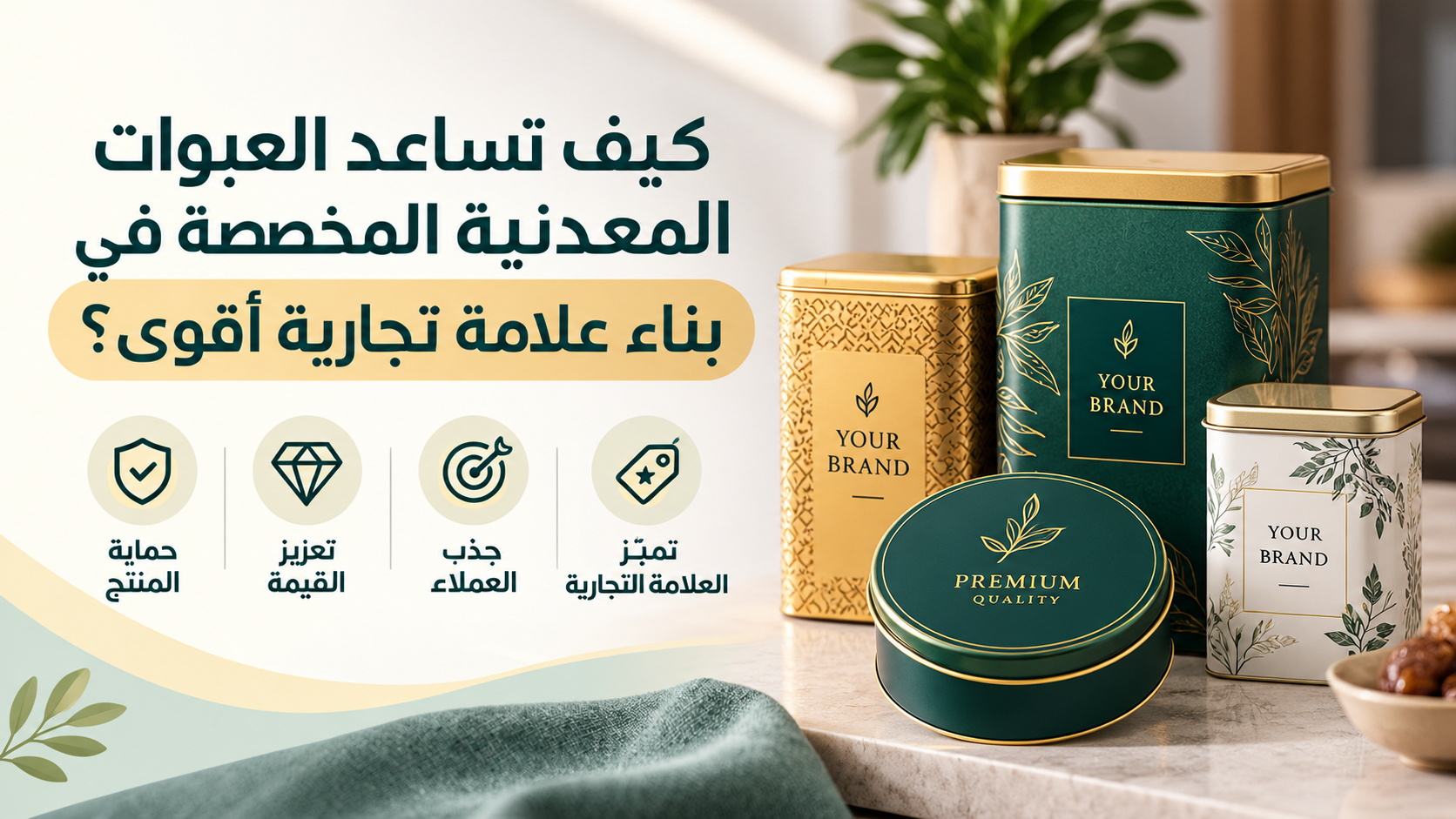
How Custom Metal Packaging Helps Businesses Build Stronger Brands
In today's competitive marketplace, businesses need more than a high-quality product to attract customers and earn their trust. They also need packaging that communicates quality, reflects their brand identity, and creates a memorable experience. Before customers taste a product, use it, or discover its benefits, they often notice its packaging first.
This is where custom metal packaging becomes a powerful branding tool. With distinctive shapes, high-quality printing, premium finishes, and durable construction, metal packaging allows businesses to present their products in a way that stands out from the competition.
From food and confectionery to edible oils, specialty products, promotional gifts, and industrial applications, customized metal containers can help brands build a consistent identity and deliver a professional customer experience.
At Tinova, metal packaging solutions combine practical performance with customization options that help businesses bring their brand vision to life. But how exactly does custom metal packaging strengthen a brand? Let's explore the key benefits and how businesses can make the most of this packaging solution.
1. Creates a Strong and Recognizable Brand Identity
Brand identity is more than a logo. It includes the colors, typography, visual elements, packaging style, and overall impression customers associate with a business.
Custom metal packaging gives companies a physical surface on which to express these elements consistently. Rather than relying on generic containers, businesses can create packaging that reflects their unique personality and market positioning.
For example, a premium chocolate brand might choose a dark color palette, elegant typography, and metallic accents to communicate sophistication. A food brand may prefer bright colors, clear product information, and a clean design that communicates freshness and reliability.
With customized metal tins and containers, businesses can incorporate:
- Brand logos and signature colors
- Distinctive graphics and illustrations
- Product names and descriptions
- Brand messaging and visual patterns
- Custom shapes, dimensions, and finishes
When customers repeatedly encounter these visual elements, they have more opportunities to recognize and remember the brand.
Why it matters: Consistent packaging helps businesses create a recognizable visual identity across different products, retail locations, and marketing campaigns.
2. Makes Products Stand Out on Retail Shelves
Retail environments are crowded with products competing for attention. When several brands offer similar products, packaging can influence which item a customer notices first.
Custom metal packaging offers an opportunity to differentiate products through its structure, appearance, and finish. Unlike standard packaging that may look similar across competing products, a distinctive metal container can create a stronger visual presence.
Businesses can explore round, square, rectangular, and other customized shapes to suit their product and brand identity. Printing options can further enhance the design through carefully selected colors, high-resolution graphics, and matte or glossy finishes.
Consider a shelf displaying several confectionery products. A chocolate brand packaged in a well-designed metal tin may attract attention because of its refined appearance, distinctive shape, and reusable container.
The same principle applies to premium dates, tea, coffee, gift assortments, and specialty food products.
To maximize shelf appeal, businesses should focus on:
- Clear and recognizable branding
- Attractive but readable typography
- Colors that distinguish the product from competitors
- A packaging shape suited to the product category
- A balanced design that avoids unnecessary visual clutter
The goal is not simply to make packaging look attractive. It is to make the product easier to recognize and the brand easier to remember.
3. Communicates Quality and Premium Value
Customers often form expectations about a product before they experience it. Packaging contributes to those expectations by communicating whether a product feels affordable, practical, premium, traditional, modern, or luxurious.
Metal packaging can help businesses create a premium presentation because of its solid construction, durable feel, and wide range of decorative possibilities.
For brands selling luxury chocolates, specialty confectionery, premium dates, gift sets, or carefully presented food products, a custom metal tin can reinforce the perception of quality.
A thoughtfully designed package might feature a smooth matte finish, metallic detailing, an embossed logo, or a carefully coordinated color scheme. These details help create a polished appearance that aligns with a premium brand position.
However, premium packaging works best when its appearance matches the product inside. Customers expect the quality of the packaging, product, and overall experience to feel consistent.
Businesses should therefore consider metal packaging as part of a broader product strategy rather than an isolated design decision.
Branding advantage: Well-designed metal packaging can help businesses present their products with greater perceived value and create a more refined first impression.
4. Provides More Opportunities for Customization
Every brand has different packaging requirements. A company selling cooking oil needs a different container from a confectionery manufacturer, a tea brand, or a business creating corporate gift sets.
Custom metal packaging allows businesses to tailor the container to the product, intended audience, and desired brand image.
Custom shapes and sizes
The shape and dimensions of a package influence both functionality and visual identity. Square tins can create a contemporary, structured appearance, while round containers may suit traditional products, confectionery, and gift packaging.
Custom dimensions also help businesses accommodate different product quantities and presentation requirements.
High-quality printing
Printing transforms a plain metal container into a branded product. Depending on the design and production requirements, businesses can explore offset printing, lithography, digital printing, and other suitable printing methods.
Consistent color reproduction is especially important for businesses that want their packaging to match established brand guidelines.
Finishes and decorative details
Matte and glossy finishes can create different visual effects. Embossing and debossing can add texture by raising or recessing selected design elements, such as a logo or decorative pattern. Foil accents may also be appropriate for certain premium packaging projects.
Customized closures and practical features
The lid, opening mechanism, and overall construction influence how customers interact with the package. Choosing an appropriate closure can support convenience, storage, and the intended use of the container.
Tinova offers customizable metal packaging options, including different shapes, printing approaches, finishes, and structural specifications, helping businesses explore solutions suited to their requirements.
The most effective customization combines visual appeal with practical performance. A package should look distinctive while remaining suitable for the product it contains.
5. Builds a Memorable Customer Experience
Branding does not end when a customer sees a product on a shelf. It continues through purchasing, opening, using, storing, and interacting with the packaging.
Custom metal packaging can help make these interactions more memorable.
For instance, receiving a carefully designed tin of premium chocolates may feel different from receiving the same chocolates in a generic container. The package can contribute to the anticipation of opening the product, the presentation of its contents, and the overall gifting experience.
This can be particularly valuable for:
- Premium sweets and chocolate brands
- Specialty tea and coffee businesses
- Dates and traditional food products
- Seasonal and festive gift collections
- Corporate gifts and promotional campaigns
The customer experience depends on several details, including the ease of opening the container, the quality of the finish, the protection provided to the product, and the clarity of the information displayed.
A well-designed package should feel intentional at every stage.
For businesses, this creates an opportunity to make the product experience more consistent with the brand promise and more memorable for the customer.
6. Encourages Repeat Brand Exposure Through Reusability
One distinctive advantage of many metal tins is that customers may continue using them after the original product has been consumed.
A durable container can be repurposed for storing small household items, accessories, stationery, craft supplies, or other suitable products. The container may remain visible in a home, office, or workspace long after the original purchase.
When the packaging carries a clear logo, recognizable colors, and distinctive design elements, it can continue to remind users of the brand.
For example, a customer who reuses a branded tea tin for storage may encounter the packaging repeatedly. This creates additional opportunities for brand recognition beyond the initial purchase.
However, reuse is not automatic. Customers are more likely to keep packaging when it is attractive, functional, easy to store, and appropriately sized.
Businesses can encourage reuse by considering:
- Durable construction
- Practical container dimensions
- Easy-to-open and close lids
- Designs customers will want to keep
- Packaging that remains attractive after use
A reusable package can therefore serve both a practical purpose and a longer-term branding function.
7. Helps Businesses Differentiate Their Products From Competitors
In competitive markets, products can become difficult to distinguish when they offer similar features, ingredients, or prices.
Custom metal packaging gives businesses another way to establish a recognizable position.
A brand may use a distinctive container shape, a signature color scheme, a textured logo, or a coordinated collection of packaging designs to create a visual identity that competitors do not easily replicate.
For example, a premium dates business could develop a signature square tin with elegant printing for gifting occasions. A tea company could create a coordinated range of metal containers for different blends, using consistent branding with different colors for each variety.
This approach helps businesses maintain a recognizable identity while allowing individual products to have their own visual character.
The important consideration is consistency. Customization should support the brand's positioning rather than introduce unrelated design elements for every product.
When packaging is designed strategically, it can help customers recognize a brand, understand its product range, and distinguish it from alternatives.
8. Supports Brand Consistency Across Product Lines
As businesses expand, they often introduce new sizes, flavors, product varieties, or packaging formats. Maintaining a consistent brand identity across these products becomes increasingly important.
A coordinated metal packaging system can help solve this challenge.
Businesses can establish a core set of brand elements, including logo placement, typography, signature colors, and graphic styles, and then adapt these elements to different containers.
For example, a confectionery company may offer several product varieties in different-sized tins. Each tin can feature the same logo and design language while using a different accent color or illustration to identify the product.
This approach allows businesses to maintain brand recognition without making every package look identical.
A consistent packaging system can also simplify future design decisions. Once the brand's visual guidelines have been established, new product designs can follow the same principles.
When planning a packaging range, businesses should consider:
- A consistent logo position
- Standardized typography and brand colors
- Clear differentiation between product varieties
- Appropriate sizing for each product
- Consistent quality across production batches
This creates a more organized and professional brand presentation across the product portfolio.
9. Can Support Sustainability-Focused Brand Messaging
Sustainability has become an important consideration for many businesses when selecting packaging materials and communicating with customers.
Steel and tinplate packaging are recyclable materials, and metal can be recycled repeatedly through appropriate recycling systems. Many metal containers are also durable enough to be reused, potentially extending their useful life beyond the original product.
These characteristics can support a brand's sustainability strategy when they align with its actual packaging choices and end-of-life practices.
For example, a business may choose a reusable metal tin for a premium gift collection and encourage customers to keep the container for future use. A company may also communicate clear disposal guidance to help customers understand how to recycle the packaging where suitable facilities exist.
Nevertheless, sustainability depends on more than the material alone. Manufacturing processes, transport, protective coatings, package weight, reuse rates, and local recycling infrastructure can all influence environmental performance.
Businesses should avoid making broad environmental claims unless they can substantiate them.
When used responsibly, recyclable metal packaging and thoughtful package design can help brands communicate a more considered approach to packaging.
10. Protects the Product and Reinforces Customer Confidence
Brand reputation depends on delivering a consistent product experience. Even attractive packaging will not strengthen a brand if the contents arrive damaged, contaminated, or in poor condition.
Metal containers can provide useful protection against physical impacts and certain environmental factors. Depending on their design, construction, coatings, and closure systems, they may also help limit exposure to light, moisture, air, or other external influences.
The actual level of protection depends on the packaging specification and the product being packed.
For food products, businesses should ensure that the selected metal, internal coating, and closure system are appropriate for the specific food and storage conditions. Packaging should meet applicable food-contact requirements and be validated for its intended use.
For industrial products, the package must be suitable for the chemical properties, storage conditions, and transportation requirements of the contents.
Reliable packaging helps businesses maintain product quality throughout distribution and storage. This can contribute to customer confidence and support a consistent brand experience.
When selecting a metal packaging supplier, businesses should evaluate material suitability, manufacturing quality, closure integrity, testing procedures, and relevant certifications.
The objective is to make sure the package delivers both the appearance and the performance customers expect.
11. Creates Opportunities for Premium Gifting and Promotions
Custom metal packaging can also help businesses extend their branding beyond everyday retail products.
Gift packaging and promotional campaigns are opportunities to create a distinctive experience around a brand, particularly when the packaging itself becomes part of the gift.
Businesses can use customized metal containers for:
- Corporate gifts for clients and employees
- Festive and seasonal product collections
- Premium chocolate and confectionery assortments
- Product launch campaigns
- Limited-edition packaging
- Promotional merchandise and branded gift sets
For example, a company preparing gifts for an important business event could use metal tins printed with its brand identity and a design tailored to the occasion. The packaging can present the contents professionally while making the gift more distinctive.
A coordinated design can also help connect the physical gift to the company's broader visual identity.
For the best results, businesses should consider the recipient, occasion, contents, desired presentation, and available budget before finalizing the design.
12. Helps Businesses Build Long-Term Brand Recognition
Strong brands are built through repeated positive interactions rather than a single purchase. Packaging can contribute to these interactions by presenting a consistent identity and providing a reliable experience over time.
Custom metal packaging brings together several elements that can support this process: recognizable visuals, durable construction, product protection, customization, and potential reuse.
When customers repeatedly encounter familiar packaging, they may find it easier to identify the brand and distinguish its products from competitors.
However, packaging alone cannot guarantee loyalty. Product quality, customer service, pricing, availability, and overall value remain essential.
The strongest results come when packaging supports a wider brand strategy.
Businesses should therefore evaluate custom metal packaging not only by its appearance but also by its suitability for the product, consistency across production runs, customer experience, and contribution to the brand's long-term positioning.
How to Choose the Right Custom Metal Packaging for Your Brand
Selecting the right packaging requires a balance between branding objectives, product requirements, production capabilities, and cost.
Before working with a metal packaging manufacturer, businesses should evaluate the following factors.
1. Define your brand positioning
Decide what customers should associate with your brand. Is it premium quality, practicality, tradition, innovation, affordability, or sustainability?
Your packaging design should reflect this positioning through its colors, typography, shape, finish, and overall presentation.
2. Understand your product requirements
Identify the product's dimensions, weight, quantity, storage conditions, and any special protection requirements.
Food products, liquids, powders, and industrial materials may require different materials, coatings, closures, and testing procedures.
3. Select suitable shapes and dimensions
Choose a container that accommodates the product efficiently and creates the intended visual impact.
Avoid choosing a design solely because it looks attractive. It should also support filling, storage, transportation, and customer use.
4. Plan the artwork and printing
Prepare your logo, brand colors, product information, and other essential design elements.
Ask the manufacturer about available printing methods, color specifications, finishing options, artwork requirements, and approval procedures before mass production.
5. Evaluate manufacturing quality
Review the manufacturer's production capabilities, quality-control processes, material specifications, and experience with comparable packaging projects.
Where possible, approve a sample or production proof before confirming a large order.
6. Consider minimum order quantities and total cost
The cost of customized packaging can depend on order volume, tooling, printing complexity, materials, finishing, and delivery requirements.
Request a detailed quotation and compare the total project cost rather than looking at the unit price alone.
7. Assess delivery and supplier support
A dependable packaging partner should communicate production timelines, technical requirements, order quantities, and delivery arrangements clearly.
For businesses operating in Saudi Arabia, a local manufacturer may also offer advantages in communication, production coordination, and supply planning, depending on the project.
Taking these steps can help businesses select metal packaging that supports their brand goals while meeting operational requirements.
Why Choose Tinova for Custom Metal Packaging?
Choosing the right manufacturer is an important part of developing packaging that represents your brand effectively.
Tinova provides metal packaging solutions for businesses seeking durable containers with customizable designs and professional finishes. Its capabilities include custom shapes and dimensions, high-definition printing options, and packaging solutions for different commercial and industrial applications.
Based in Riyadh, Saudi Arabia, Tinova serves businesses looking for locally manufactured metal packaging and tailored production support.
Depending on the product and project requirements, businesses can explore solutions such as:
- Custom-printed metal tins: Packaging designed to showcase brand logos, colors, product names, and graphics.
- Different shapes and dimensions: Options for square, round, rectangular, and other customized packaging formats.
- Printing and finishing choices: Suitable printing methods and decorative finishes selected according to the project specification.
- Food-related packaging: Containers developed with appropriate material, coating, and closure requirements for the intended application.
- Business-focused production support: Assistance with packaging specifications, customization, and production planning.
Tinova's product range includes metal containers suitable for applications such as edible oils, dates, sweets, chocolates, dry foods, and gift packaging, subject to the requirements of each product.
The right solution depends on your product, order volume, desired design, and performance needs. Discussing these details with the manufacturer helps establish a suitable specification before production begins.
To explore available options, visit the Tinova website or contact the team to discuss your packaging requirements.
Conclusion: Turn Your Packaging Into a Brand-Building Asset
Custom metal packaging offers businesses an opportunity to do more than contain and protect a product. It can communicate brand identity, improve shelf presentation, support a premium image, create memorable customer experiences, and provide opportunities for continued brand exposure through reuse.
With the right design, metal packaging can also help businesses maintain consistency across product lines, differentiate themselves from competitors, and present their products more professionally.
The key is to approach packaging as a strategic part of the brand experience. Every decision, from container shape and printing to materials and closures, should serve a clear purpose.
Whether you are launching a new product, upgrading existing packaging, or developing a premium gift collection, customized metal containers can provide a flexible foundation for distinctive product presentation.
Ready to strengthen your brand with custom metal packaging?
Explore Tinova's metal packaging solutions and discuss your requirements with the team to find a design that reflects your brand, protects your product, and supports your business goals.
Visit Tinova to learn more or contact the team to request a quotation.